



FEMA 2026 is a big shift for IT and ITeS exporters in India, especially around invoicing, EDF filing, and realisation timelines. With unified forms and stricter reporting, even a small ites company now needs far more discipline in documentation and bank coordination than before.
The full form of ITES is Information Technology Enabled Services, and together with IT services, this sector has become one of the strongest pillars of India’s export economy. From SaaS startups to large BPOs and top ites companies, a huge share of their revenues now comes from overseas clients.
Recognising this, RBI’s new FEMA (Export and Import of Goods and Services) Regulations, 2026 formally bring service and software exports into a unified, principle‑based framework. FEMA 2026 consolidates multiple earlier rules, introduces a single Export Declaration Form (EDF) for goods, services and software, and tightens timelines for invoicing, EDF filing and realisation.
For the IT & ites industry in India, this means export documentation is no longer a “back‑office formality” but a core compliance function that can directly affect cash flows and even invite penalties if ignored. This is exactly where specialized FEMA Expert advisory can help exporters set up the right systems, avoid errors, and stay out of trouble.
FEMA (Foreign Exchange Management Act) is the main law that regulates how foreign exchange flows in and out of India, including payments for exported services. If you are an IT or ITeS exporter raising invoices on foreign clients and receiving foreign currency or INR from them, FEMA applies to you—whether you are a freelancer, startup, or large ites company.
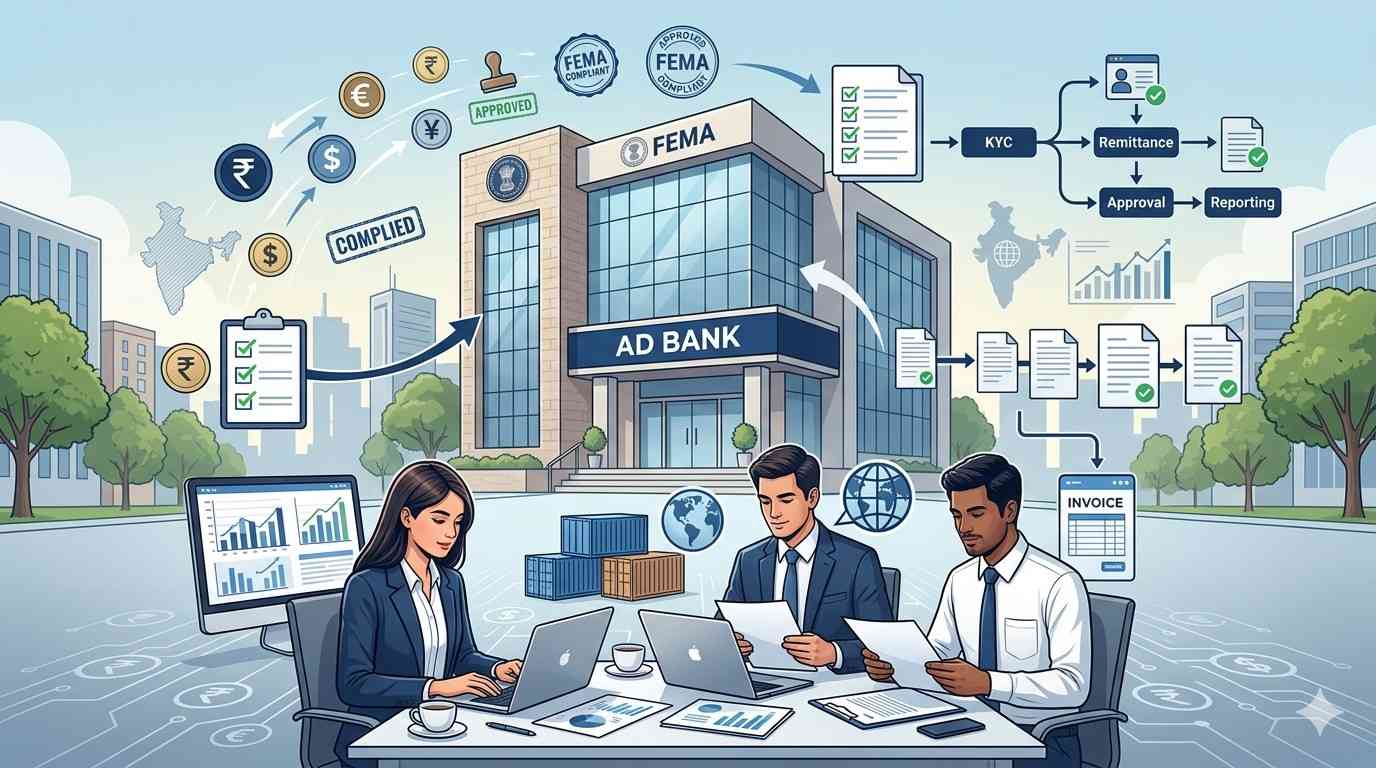
Under FEMA 2026, RBI sets the broad rules, and Authorised Dealer (AD) Banks implement them on the ground by checking your documents, accepting EDF, monitoring realisation, and reporting via EDPMS/IDPMS. The 2026 regulations:
For the fast‑growing ites industry in India, these changes bring clarity—but also more structured responsibilities.
In FEMA 2026, invoicing is the starting point of the entire compliance chain for IT and ITeS exporters. Typically, the invoice date for services becomes the reference point for both EDF filing and realisation timelines.
When you raise invoices for IT/ITeS services, make sure they clearly capture:
Common mistakes that trigger FEMA‑level issues include:
To stay safe, always align your invoices with your master service agreement (MSA), work orders, and email trails, so that if your AD Bank or RBI ever reviews a file, everything tells the same story.
FEMA 2026 overhauls export declarations by introducing a single Export Declaration Form (EDF) for all exports—goods, services, and software alike. Earlier, software exporters had to deal with SOFTEX forms and STPI; now, IT and ITeS companies can file EDF directly through their AD Banks, which are recognized as specified authorities.
For service exporters:
For the IT and ites industry, this means building a routine: close your invoices for the month, reconcile them, and file a consolidated EDF through your AD Bank within the permitted window.
“Realisation” under FEMA simply means that the money for your export invoice has actually come into India through authorised channels within the prescribed time. FEMA 2026, along with recent amendments, has generally extended the realisation period from 9 months to around 15 months for both goods and services exports, with up to 18 months in some INR‑settled or special cases.
Key points for IT/ITeS exporters:
If your overseas client pays late or only partially, you may need to seek extensions, reductions, or write‑offs through your AD Bank, supported by documentation and sometimes FEMA Expert advice.
In practice, IT and ites companies often struggle with:
All of this can slow down realisation, create EDPMS/IDPMS mismatches, and invite unnecessary compliance scrutiny.
Ignoring FEMA 2026 obligations can be expensive. Failure to realise and repatriate export proceeds within the permitted period is a civil offence under FEMA, with penalties that can go up to three times the amount involved in some cases. Incorrect or delayed EDF filings can also trigger audits, show‑cause notices, and demands to regularise past transactions.
For a fast‑growing IT or ites company, the bigger risk is reputational and operational:
Maintaining audit‑ready documentation—contracts, invoices, emails, delivery proofs, and bank advices—is therefore non‑negotiable.
To keep FEMA compliance manageable, IT and ites companies can adopt a few practical best practices:
For the broader ites industry in India, building these processes early separates compliant, scalable exporters from those who constantly firefight.
A dedicated FEMA Consultant (individual or firm) can be a powerful ally for IT and ites companies that are scaling fast or handling complex cross‑border structures. Their support typically covers:
For top ites companies as well as growing startups, expert guidance reduces risk, saves management time, and allows founders to focus on core delivery and sales instead of regulatory firefighting.
Looking ahead, FEMA 2026 clearly points toward a more digital, bank‑driven, and data‑rich compliance environment. Key trends include:
For the ites industry, this is an opportunity: those who embrace strong compliance can build more trust with clients, investors, and global partners.
For IT and ITeS exporters, invoicing, EDF filing, and timely realisation are no longer just operational tasks—they are the three core pillars of FEMA compliance under the 2026 framework. Small errors or delays can snowball into regulatory issues, bank escalations, and penalties, especially as monitoring becomes more data‑driven.
The good news is that with the right internal systems, close coordination with AD Banks, and expert support from FEMA specialists, IT and ites companies can stay compliant while confidently scaling their global business.
1. What is the full form of ITES and who falls under the ites industry?
The full form of ITES is Information Technology Enabled Services, covering BPOs, KPOs, call centres, shared services, and many process‑driven digital services delivered using IT.
2. Do small ites companies and freelancers also need to file EDF?
Yes. Under FEMA 2026, any exporter of services or software who raises invoices on foreign clients and receives foreign exchange must file EDF through a specified authority, usually their AD Bank.
3. What is the new EDF rule for software exports?
SOFTEX is being phased out; a single EDF now covers goods, services, and software, and IT/ITeS exporters can get their exports certified directly by AD Banks instead of relying only on STPI.
4. What is the export realisation period for IT/ITeS services under FEMA 2026?
Export proceeds for services generally must be realised within 15 months from the date of invoice, with some flexibility and longer timelines (up to 18 months) in specific Rupee‑settled or special cases.
5. What happens if my overseas client pays after 15 months?
Delayed realisation beyond the permitted time can be treated as a FEMA contravention unless you obtain an extension or regularisation through your AD Bank, and in serious cases it may attract penalties under FEMA Section 13.
6. How can a FEMA Expert help IT and ites companies specifically?
A FEMA Expert helps design compliant invoicing and payment structures, set up EDF and realisation workflows, handle bank queries, and regularise past non‑compliances so that IT and ites companies can focus on growth.