


Extended export realisation timelines of 15 and 18 months give Indian exporters more breathing room, but they also change how you manage treasury, working capital, and compliance under FEMA.
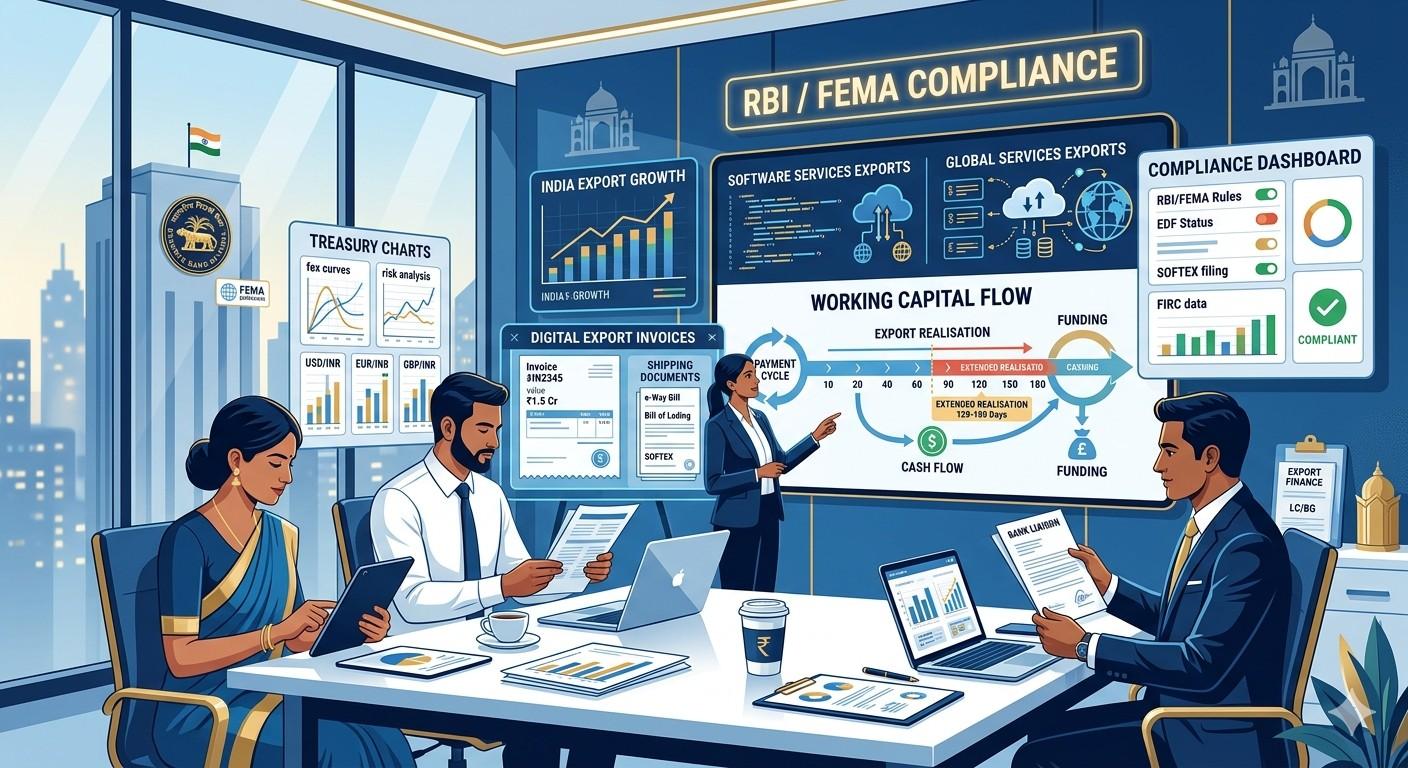
The Reserve Bank of India (RBI) has extended the standard export proceeds realisation period from 9 months to 15 months under the amended Foreign Exchange Management (Export of Goods and Services) Regulations. In parallel, the new FEMA 2026 framework allows up to 18 months for exports invoiced or settled in Indian Rupees (INR), creating a differentiated timeline for rupee-denominated trade.
These changes arrive just as the legacy SOFTEX regime is being phased out and replaced by a unified Export Declaration Form (EDF) that covers goods, software, and services under one umbrella. For exporters, especially software and service companies, this combination of extended timelines and a new reporting framework has deep implications for treasury, working capital, and compliance—precisely where a specialised FEMA advisory partner like Fema Expert can add value.
Under FEMA, export realisation is the process of bringing foreign (or INR) export proceeds back into India within the prescribed time and proving it through banking and regulatory documentation. Historically, exporters were required to realise and repatriate export proceeds within 9 months from the date of export or invoice, with limited room for extensions.
Following amendments notified in 2025–26, RBI has revised this standard period to 15 months for most exports of goods, services, and software, counted from the date of shipment (for goods) or date of invoice (for services). For exports invoiced or settled in INR, the realisation period has been further extended to 18 months, acknowledging the growing role of rupee trade.
RBI’s decision is driven by a mix of practical and strategic considerations. Exporters routinely face delays due to longer shipping routes, complex approval chains at the buyer’s end, and slow foreign banking processes, making the earlier 9‑month window difficult in many cases. By extending the period to 15 months (and 18 months for INR), RBI is aligning Indian regulations with longer international payment cycles and supporting larger, milestone-based or long‑gestation contracts.
The extension also fits into India’s broader “ease of doing business” agenda under FEMA—reducing pressure on exporters, lowering the risk of technical non‑compliance, and allowing AD banks greater flexibility to manage genuine delays before escalation to RBI.
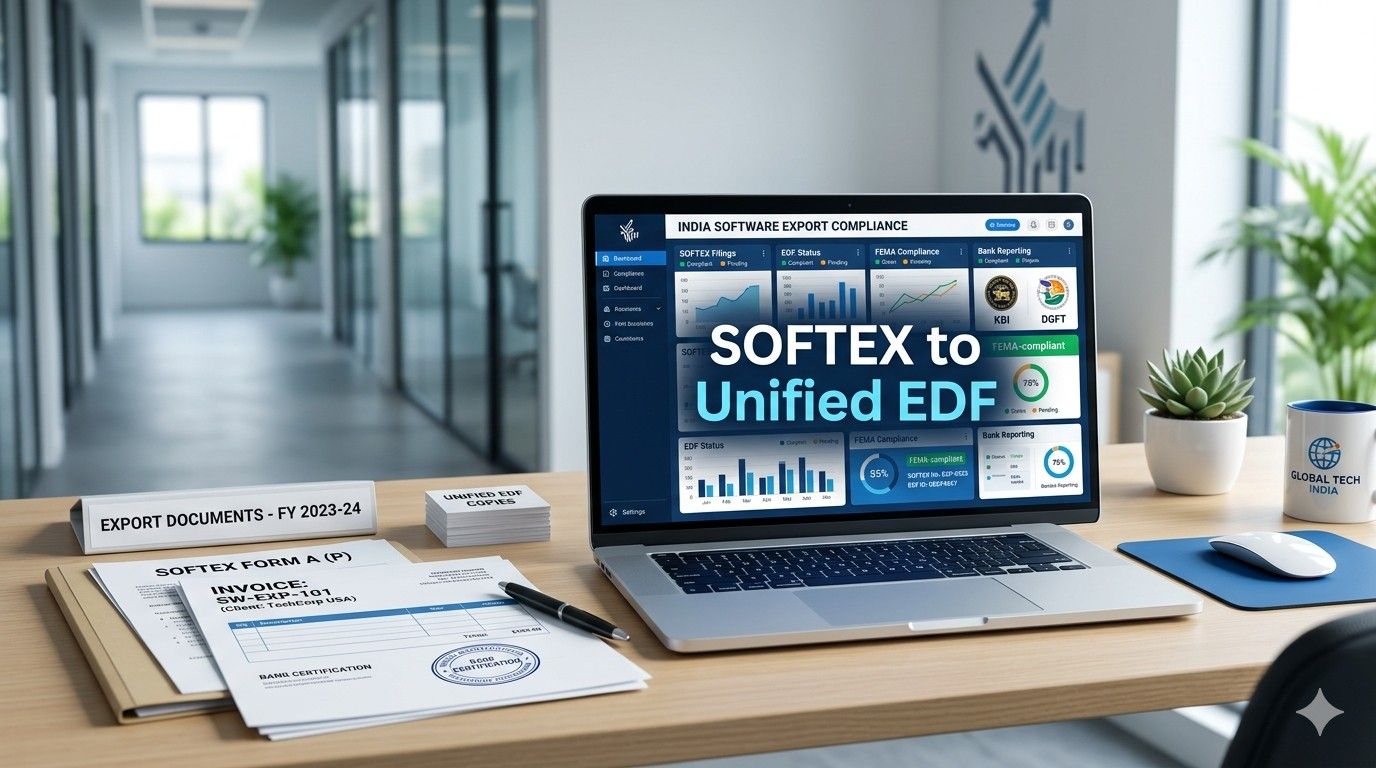
From 1 October 2026, the long‑standing SOFTEX form for software exports will cease to exist and will be replaced by a unified Export Declaration Form (EDF) covering goods, software, and all other services. Under this new regime, software is treated as a sub‑category of services, and exporters move from fragmented reporting (SOFTEX, separate service declarations, etc.) to a single EDF‑based system.
Authorised Dealer (AD) banks become central to certification and compliance under the unified EDF, alongside STPI and SEZ authorities, meaning banks now sit at the intersection of export reporting, realisation tracking, and FEMA compliance. Extended realisation timelines must therefore be embedded into your internal processes and mapped correctly to EDF filings, EDPMS status updates, and bank-level monitoring.
Longer realisation periods directly affect how treasury teams forecast, monitor, and hedge export cash flows. Cash flow projections now need to incorporate a 15–18 month potential collection horizon, rather than assuming that receivables will convert within 9 months. This extended window can help match inflows with longer‑term contracts, but it also demands more granular ageing buckets and scenario‑based forecasting.
Foreign exchange exposure management becomes more complex as invoices remain open for longer, increasing the time during which exchange rates can move against the exporter. Treasurers must reassess hedging strategies—tenors, instruments, and roll‑over policies—to ensure that forward contracts or options are aligned with realistic collection timelines rather than idealised ones.
From a working capital perspective, extended realisation timelines are a double‑edged sword. On one hand, the regulatory relaxation reduces the urgency to push for early payments purely to meet FEMA deadlines, potentially reducing friction with overseas customers. On the other, cash actually reaches your bank later if customers utilise the full flexibility, which can tighten operating cash flows and increase reliance on export finance and working capital limits.
Exporters who depend heavily on pre‑shipment and post‑shipment credit must therefore recalibrate their limits, drawing patterns, and cost of funds assumptions. Liquidity buffers, internal credit policies, and risk‑based pricing for long‑tenor contracts become more important to avoid stress during extended collection periods.
For software and service exporters, especially those working on long‑term implementation, SaaS, or milestone‑based contracts, the new 15/18‑month timelines offer genuine commercial flexibility. Longer realisation windows give you room to negotiate phased payments tied to project milestones, user acceptance tests (UATs), or adoption metrics without constantly worrying about crossing regulatory deadlines.
The end of SOFTEX and introduction of the unified EDF also simplifies the compliance journey for many domestic tariff area software exporters, who can now work more closely with their AD banks instead of juggling multiple authorities. This can translate into faster documentation, quicker resolution of discrepancies, and better integration of export reporting with treasury systems and payment gateways.
Extended timelines do not eliminate risk; they redistribute and sometimes amplify it. Delayed collections remain a core concern—if customers start treating 15 or 18 months as the “new normal”, your receivable ageing profile can deteriorate significantly. Over a longer horizon, currency volatility can be sharper, creating mark‑to‑market swings on unhedged receivables and impacting margins.
Compliance risk also remains live: if export proceeds are not realised within the extended period and no further approval is obtained from the AD bank or RBI, the exporter can still face FEMA penalties and restrictions on future exports or credit facilities. With the unified EDF and new FEMA 2026 framework replacing the 2015 regulations and multiple circulars, there is also a learning curve in interpreting rules correctly and updating internal SOPs.
To leverage the new flexibility without compromising financial discipline, exporters should:
A specialised FEMA advisory partner like Fema Expert sits at the intersection of regulation, banking practice, and business reality, helping exporters translate regulatory changes into practical policies. They can help you interpret the revised FEMA export regulations and RBI circulars in the context of your specific business model, contract structures, and geographies.
On the treasury side, Fema Expert can support you in designing or refining cash flow forecasting models, FX risk management frameworks, and hedging policies that are consistent with the 15/18‑month realisation environment. They can also advise on Unified EDF implementation—mapping your ERP and invoicing systems to the new reporting requirements, coordinating with AD banks, and creating checklists for timely, accurate filings. Additionally, they can guide you on working capital optimisation, export finance options, and regulatory risk mitigation when collections are delayed.
The extension of export realisation timelines to 15 months—and 18 months for INR‑denominated exports—marks a structural shift in India’s export and FEMA landscape. It offers much‑needed flexibility but demands stronger treasury discipline, sharper receivables control, and closer coordination with AD banks under the new Unified EDF framework. Exporters who proactively adapt their policies and systems, and who partner with FEMA specialists like Fema Expert, will be best placed to convert this regulatory breathing room into sustainable growth rather than hidden risk.
Under the amended FEMA export regulations, export proceeds for goods, services, and software must generally be realised and repatriated within 15 months from the date of shipment or invoice, compared to the earlier 9‑month requirement.
The 18‑month realisation period applies to exports that are invoiced and/or settled in Indian Rupees (INR), reflecting RBI’s push to promote rupee‑denominated international trade. Your contracts and invoices must clearly indicate INR settlement to fall under this category.
No separate application is required to use the 15‑month realisation period; it is the new default timeline under the amended regulations. However, if you cannot realise proceeds within 15 (or 18) months, you must approach your AD bank for an extension or RBI approval, failing which it may be treated as a FEMA non‑compliance.
From 1 October 2026, the SOFTEX form will be discontinued, and software exports will be reported through the unified EDF, alongside goods and other services. This means consolidated reporting, greater involvement of AD banks in certification, and the need to align your internal invoicing and compliance workflows with a single EDF‑based system.
If export proceeds remain unrealised beyond the applicable 15 or 18‑month period and no further extension is granted, the exporter may face FEMA penalties and potential restrictions on future exports, credit limits, or bank facilities. In severe or repeated cases, future exports may be permitted only against advance payment or irrevocable letters of credit, tightening business flexibility.
Fema Expert can help you interpret the new FEMA and RBI rules, design compliant export and treasury processes, coordinate with AD banks on EDF and realisation issues, and optimise working capital and hedging strategies under the extended timelines. This allows your finance and treasury teams to focus on growth while staying on the right side of regulation.
“`html “`