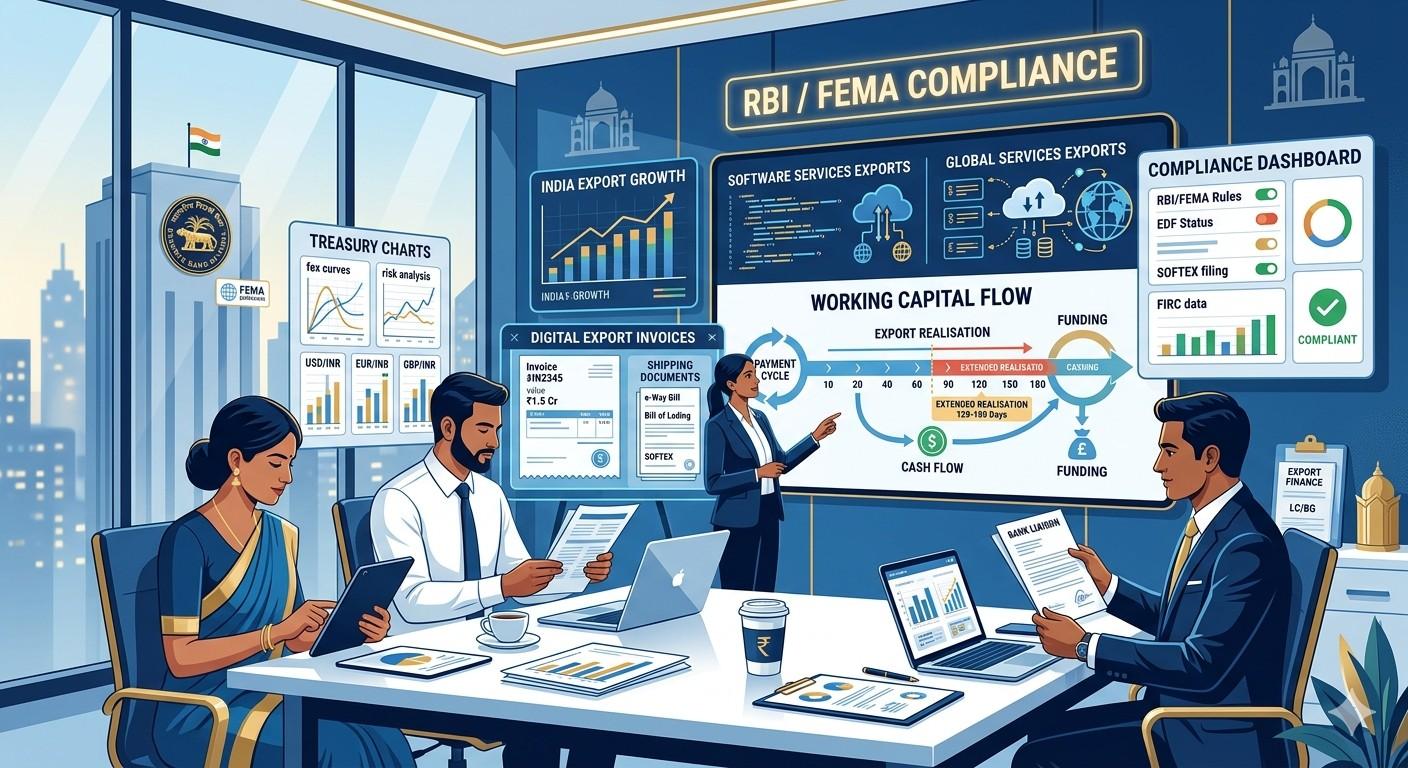


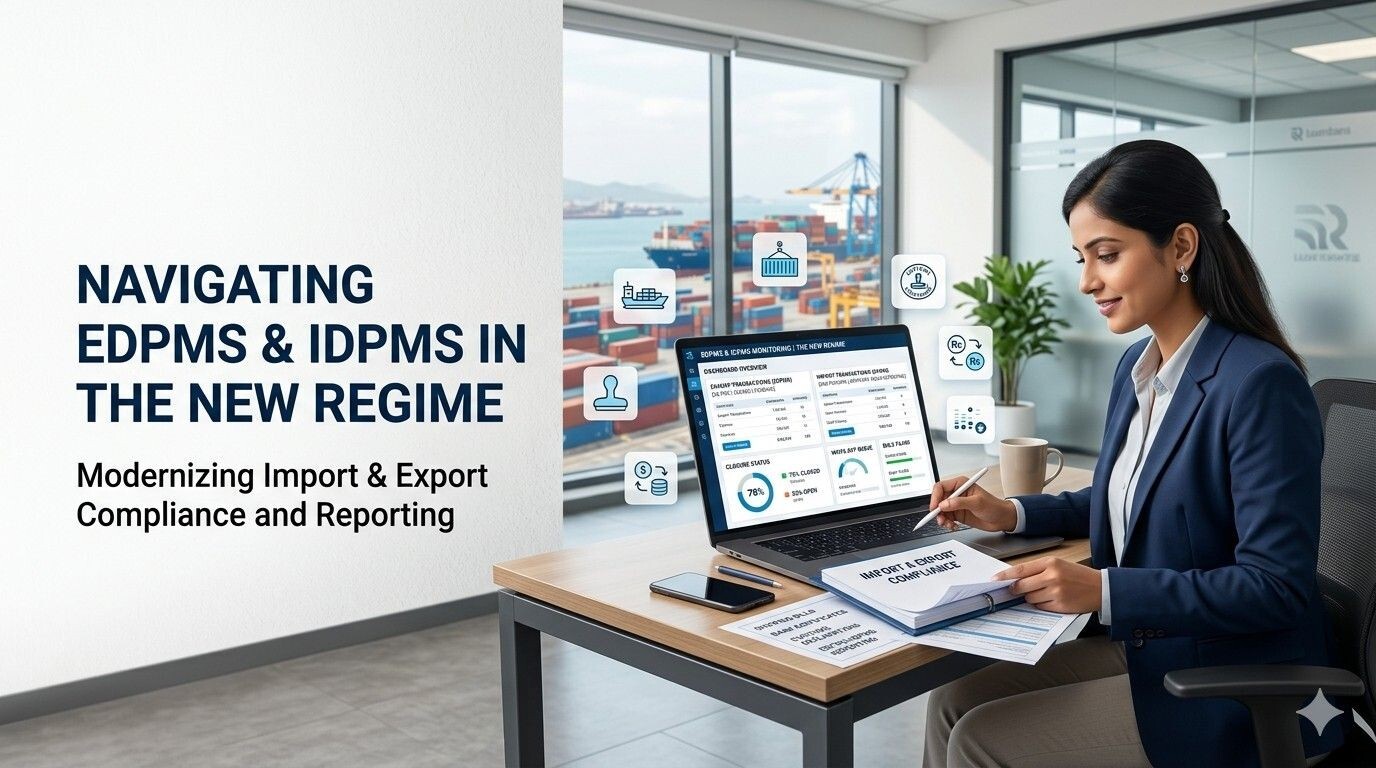

Export–import compliance in India has become far more system-driven over the last decade, largely due to the RBI’s introduction of the EDPMS and IDPMS portals for monitoring cross-border transactions under FEMA. With the new regime introduced via RBI’s October 2025 circular, small-value export and import entries can now be closed more easily, significantly reducing compliance friction for businesses.
Every export or import from India has to comply with FEMA, which means the underlying foreign exchange inflow or outflow must be reported correctly and within prescribed timelines. Earlier, this meant heavy paperwork and manual follow-ups with banks and regulators, and any mismatch could lead to caution listing or even enforcement action.
To make this process digital, the RBI created two systems: EDPMS (for exports) and IDPMS (for imports), both operated through online RBI-linked bank systems often referred to as the EDPMS portal and RBI IDPMS portal. The “new regime” announced in October 2025 simplifies closure, write-offs and bulk reporting—especially for entries up to ₹10 lakh—giving a big relief to MSMEs and high-volume traders.
The EDPMS full form is Export Data Processing and Monitoring System. In simple terms, it is RBI’s central online system that tracks an export right from the shipping bill or SOFTEX form to the actual foreign currency realization in the exporter’s bank account. Launched in 2014, the EDPMS portal replaced manual registers and physical statements, allowing AD Category I banks to report and reconcile export bills online while issuing e-BRCs for GST and other regulatory purposes.
The Import Data Processing and Monitoring System (IDPMS) is the parallel system for imports. It captures data from the customs Bill of Entry and links it with import remittances to ensure that payments made through banks match the underlying import transactions within FEMA timelines. The RBI IDPMS portal thus helps banks and regulators monitor outstanding Bills of Entry, overdue payments, and potential non-compliance on the import side.
Both EDPMS and IDPMS operate within the framework of the Foreign Exchange Management Act, 1999, which governs how foreign exchange is received and paid for current account transactions like trade. RBI issues detailed Master Directions on export and import of goods and services, and AD Category I banks are responsible for implementing these rules via the EDPMS and IDPMS systems.
The key change in the new regime is RBI’s A.P. (DIR Series) Circular No. 12 dated 1 October 2025, which relaxes the closure rules for small-value entries in both systems to reduce compliance burden and legacy pendency. This circular also nudges banks to rationalise charges and avoid penal fees in such small-value cases.
In this context, “closure” simply means that the export or import transaction has been reconciled and marked as completed in EDPMS or IDPMS, with no outstanding obligation remaining. For exports, closure typically requires the bank to match the shipping bill with realized inward remittance and then mark the entry as closed, triggering e-BRC generation; for imports, closure means the Bill of Entry is fully matched with outward remittances or otherwise regularised.
Under the new regime, AD banks can close any EDPMS or IDPMS entry of value up to ₹10 lakh per bill based simply on a declaration from the exporter or importer confirming realization or payment. Practically, businesses still face challenges like missing documents, old unmatched entries, and data mismatches between customs and bank systems, which is why proactive reconciliation and expert guidance are crucial.
A write-off in this context means closing an export or import entry even when the full invoice value has not been realised or paid, subject to RBI rules. For imports, existing RBI guidelines allow AD banks to close Bills of Entry in IDPMS with a write-off of up to 5% of invoice value in cases such as discounts, exchange rate differences, or changes in freight and insurance, and also on grounds like short shipment or destruction of goods with appropriate documentation.
For exports, the Master Direction on export of goods and services and subsequent circulars permit banks to allow write-offs within certain percentage limits, depending on who is approving (bank or RBI) and the reason, such as genuine disputes, insolvency of overseas buyer, or quality claims. In practice, exporters and importers need to provide supporting documents like correspondence with buyers/suppliers, credit notes, insurance settlement letters, inspection reports, or regulatory orders to justify any write-off.
Bulk reporting in this context refers to closing or reconciling multiple EDPMS/IDPMS entries together instead of one-by-one, using consolidated declarations and system-based processing. Under the October 2025 circular, exporters and importers can submit consolidated quarterly declarations to their AD bank for all eligible small-value entries (up to ₹10 lakh each) so that the bank can reconcile and close them in bulk.
This is particularly beneficial for large organizations, MSMEs and e‑commerce sellers that handle high volumes of low-ticket invoices where manual closure for each bill is impractical. However, bulk reporting requires clean internal data, proper mapping between invoices, shipping bills/Bills of Entry and bank remittances, and strong internal controls to avoid errors that could attract FEMA scrutiny later.
Despite the digital systems, several typical issues keep entries open in EDPMS and IDPMS:
Given the complexity of EDPMS and IDPMS and the evolving RBI guidelines, many businesses now rely on FEMA and trade compliance experts. A competent FEMA advisor can help you:
To stay on top of EDPMS and IDPMS in the new regime:
EDPMS and IDPMS have become the backbone of India’s export–import compliance architecture, replacing paper-based reporting with real-time digital monitoring under FEMA. The new RBI regime, especially the October 2025 circular, makes life easier for businesses by allowing simplified closure of entries up to ₹10 lakh based on declarations and enabling consolidated bulk reporting without penal charges for regulatory delays.
However, the responsibility still lies with exporters and importers to keep their data clean, close old entries, and manage write-offs properly to avoid FEMA risk. If your organisation is dealing with legacy pendency or high transaction volumes, it is wise to consult a FEMA expert or trade compliance specialist who can help you leverage the new regime while staying fully compliant.
The EDPMS full form in banking is Export Data Processing and Monitoring System, which is RBI’s online platform to track export transactions from shipping bill/SOFTEX to payment realization and e‑BRC issuance.
EDPMS and IDPMS are twin systems: EDPMS monitors exports and related inward remittances, while IDPMS tracks imports and related outward remittances against Bills of Entry under FEMA rules.
Closure means that the bank has reconciled the export or import entry with the corresponding realization or payment (including any permitted write-off or adjustment) and has marked the bill as “closed” in the system, leaving no outstanding obligation.
Under RBI’s October 1, 2025 circular, AD Category I banks can close EDPMS and IDPMS entries of value up to ₹10 lakh per bill based on a simple declaration from the exporter/importer, accept value reductions on the same basis, and even process quarterly consolidated declarations for bulk closure without penal charges.
Bulk reporting involves submitting a quarterly consolidated declaration covering multiple eligible small-value export or import entries so that the bank can reconcile and close them together in EDPMS/IDPMS, instead of processing each bill individually.
A write-off allows closure of an entry even when full invoice value is not realised/paid, subject to RBI limits and reasons such as discounts, disputes, quality issues, or destruction of goods; for imports, RBI has allowed banks to close Bills of Entry with write-offs up to 5% of invoice value in specified situations.
Old unpaid or unreconciled entries can lead to overdue status, caution listing, audit queries, and possible FEMA enforcement, and may also distort your reported import/export position, so timely closure or regularisation is critical.