



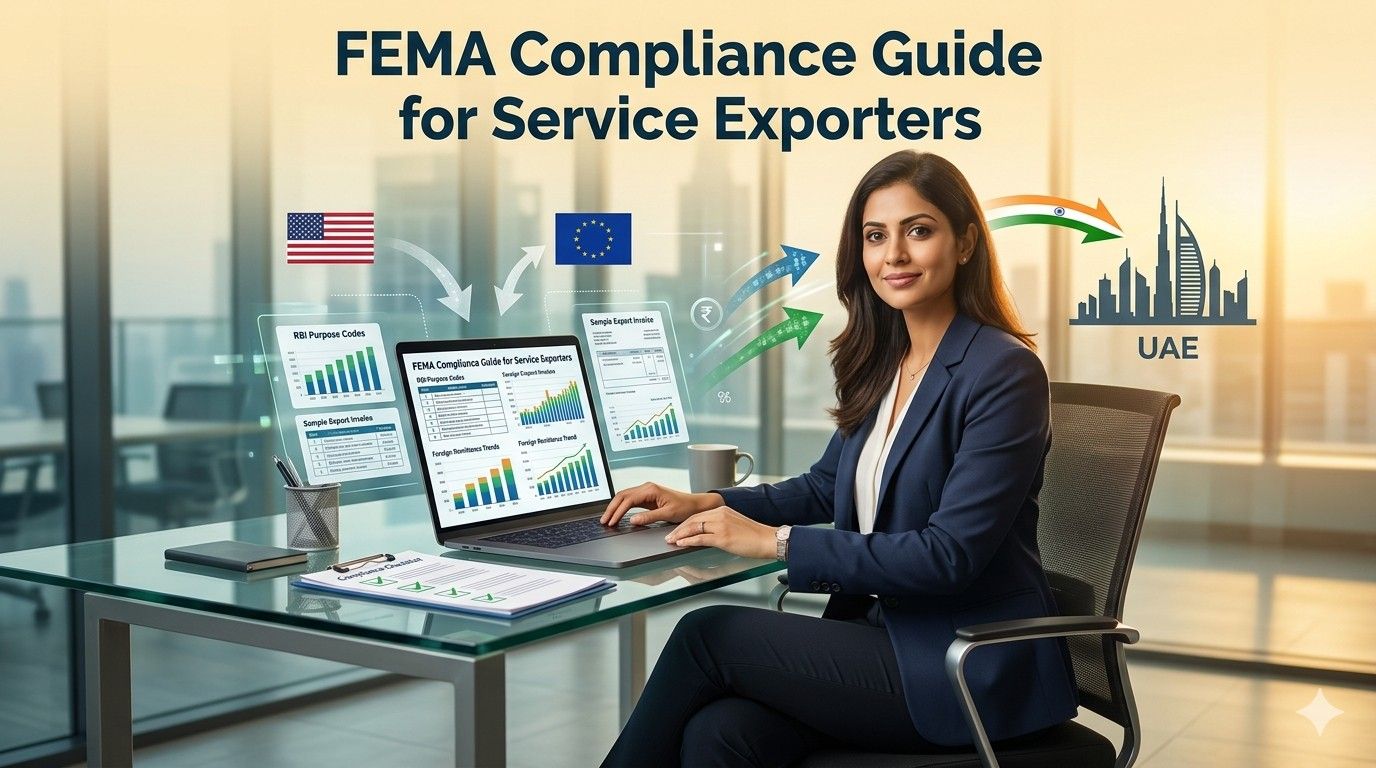
Indian professional services are no longer limited to local clients. Consultants, law firms, CA practices, compliance specialists, and virtual CFOs are now regularly serving clients in the US, UK, EU, Middle East, and other markets.
Thanks to remote work and digital delivery, services like legal advisory, tax planning, accounting, compliance outsourcing, audit support, and finance operations can be delivered completely online, while payments flow in through international remittances.
However, the moment you start earning in foreign currency, you step into the world of FEMA and RBI regulations. FEMA (Foreign Exchange Management Act, 1999) governs how foreign exchange flows into and out of India, and non-compliance can lead to blocked payments, bank queries, or even penalties.
This is exactly where a FEMA Expert becomes valuable. The right advisor helps you structure contracts, select correct purpose codes, and manage documentation so that your foreign remittances are smooth, timely, and fully compliant.
Under FEMA and RBI’s export framework, services are treated as exports when: the supplier is in India, the client is outside India, the place of supply is outside India, and payment is received in convertible foreign exchange.
This typically covers:
The big confusion for many firms is the difference between domestic services and export services. Even if you physically sit in India, if your client is abroad and pays you in foreign currency, the transaction is generally treated as an export of services for FEMA and GST purposes.
To support this position, you should always have:
FEMA does not work in isolation. It operates along with RBI Master Directions on export of goods and services and new EXIM regulations for exports and imports.
Key elements that affect consulting, legal, and professional firms include:
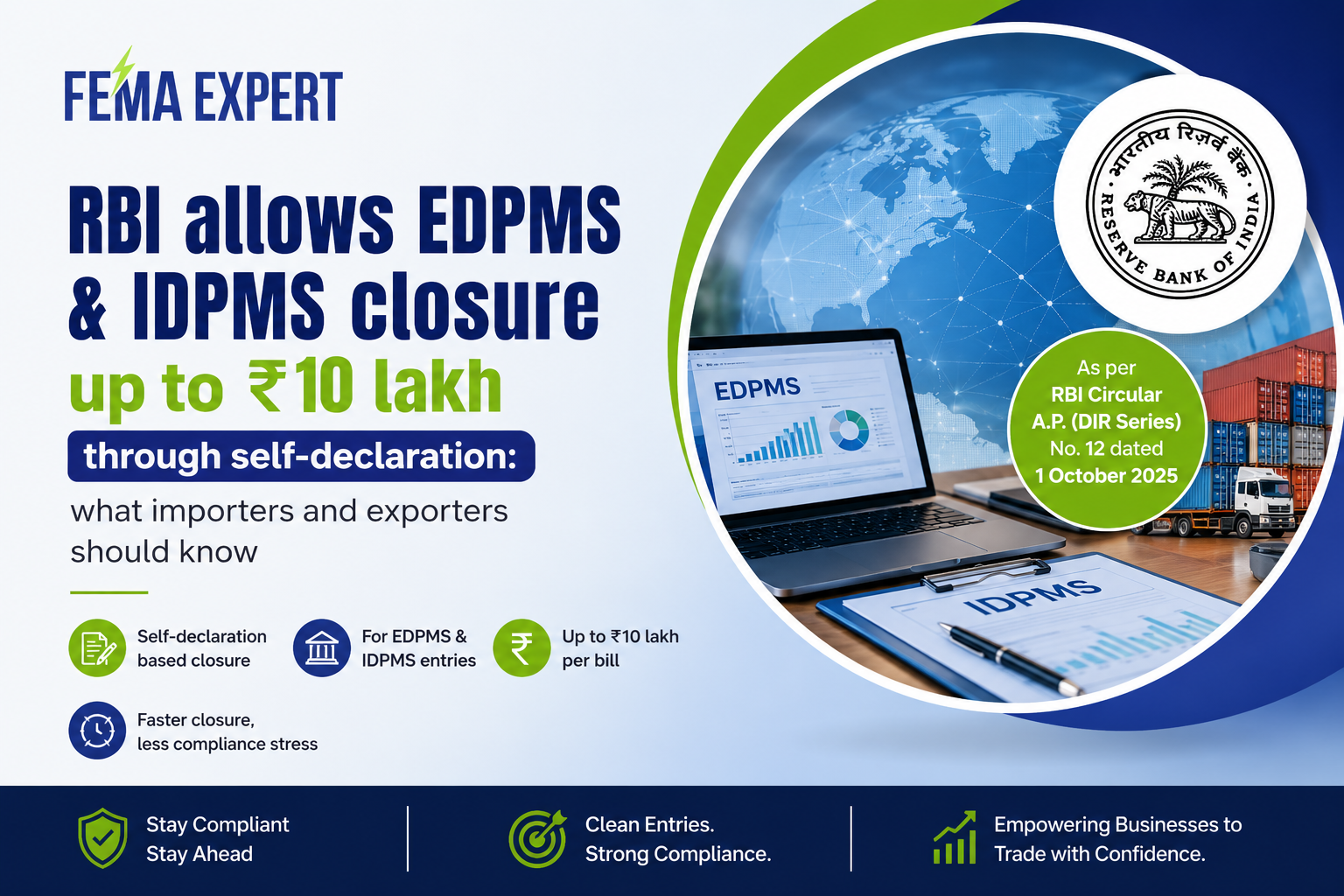
In recent changes, RBI has generally extended the standard realisation period for export proceeds from 9 months to 15 months, giving exporters more flexibility but still expecting timely repatriation.
Scrutiny has also increased. Banks now use automated and AI-based systems to flag transactions where documents, purpose codes, or client details do not match, which is why many service exporters suddenly see their payments put on hold for clarification.
Think of FEMA compliance as part of your regular operations, not a one-time task. A simple internal checklist can save a lot of headache later.
Every international engagement should have a written agreement covering:
This document is often the first thing banks or auditors ask for when they review foreign remittance history.
Your export invoices should:
Consistent client names, addresses, and invoice numbers reduce the chances of bank queries when inward remittances come in.
For each export receipt, make sure you collect and safely store:
These documents are essential during audits, due diligence, or while claiming export incentives and GST refunds.
RBI purpose codes are a critical part of FEMA compliance. They classify the reason for each inward remittance. For professional services, common codes include:
Choosing a random or incorrect code simply because it appears first in a dropdown can cause problems later during scrutiny, GST matching, or when explaining the nature of receipts.
Export proceeds for services must be realised and repatriated within the permitted FEMA timeline, which for most service exports is now 15 months from the date of invoice.
Delays without valid reasons or bank-approved extensions can attract notices, penalties, or questions from both FEMA and tax authorities.
In practice, most consulting and professional firms face very similar issues.
Common problems include:
These issues can snowball into bigger risks such as regulatory notices, restrictions by banks on outward and inward remittances, or questions during statutory audit and due diligence by investors.
Most of this is avoidable with better documentation discipline and a clear internal SOP for cross-border engagements.
Global Capability Centres (GCCs) set up by multinational groups in India have significantly increased demand for consulting, legal, accounting, and compliance services. Many GCCs rely on external Indian firms for audit support, policy drafting, regulatory filings, and specialised advisory.
These arrangements often involve:
Such structures have clear FEMA and RBI implications, especially around documentation of intercompany arrangements, correct purpose coding, and consistent repatriation of income.
GCC-focused firms therefore need stronger FEMA structuring, clear documentation standards, and robust monitoring of all cross-border payments to avoid any friction with banks or regulators.
A FEMA Expert is not just a problem-solver after something goes wrong. Ideally, they are involved from the design stage of your international business model.
For consulting, legal, accounting, and professional firms, a FEMA specialist typically helps with:
You should particularly consider consulting a FEMA Expert when:
Early advice usually costs far less than fixing a long list of historical mistakes.
To make FEMA compliance part of your normal workflow, put a simple structure in place.
Operationally, you can:
Technology can make all of this much easier. Many firms now use:
These steps not only help with FEMA but also make your firm look more professional during client and investor audits.
India is steadily positioning itself as a global hub for consulting, legal, accounting, tax, and compliance services. GCCs and remote-first global companies are accelerating this trend.
Regulators like RBI are responding with more unified, digital, and automated frameworks for export and import of goods and services, including consolidated regulations and harmonised reporting forms.
That means the opportunity is huge, but so is the expectation of clean compliance. Firms that invest early in FEMA-ready systems and expert guidance will find it easier to scale globally without interruptions to cash flow.
For consulting, legal, accounting, and professional service exporters in India, FEMA compliance is now a core operational requirement, not a side topic for year-end discussions.
Proper structuring of contracts, invoices, purpose codes, and documentation protects you from foreign payment delays, banking scrutiny, and regulatory risks.
With GCCs expanding and foreign demand for Indian expertise rising, the firms that combine strong delivery with strong compliance will win the most. Working closely with a FEMA Expert helps you build that foundation, so you can focus on serving clients while staying confidently compliant.
1. What is FEMA compliance for service exporters?
FEMA compliance for service exporters means following RBI and foreign exchange regulations while providing services to overseas clients and ensuring that all foreign currency payments are properly realised and repatriated to India within the prescribed timelines.
2. Are consulting services considered exports under FEMA?
Yes. Consulting, legal, accounting, and other professional services provided from India to clients located outside India can qualify as export of services, provided the place of supply is outside India and payment is received in convertible foreign exchange through normal banking channels.
3. Why are banks asking for additional documents for foreign remittances?
Banks act as Authorised Dealers under RBI, so they must verify KYC, purpose codes, contracts, and invoice details before clearing international payments. With more automated and risk-based systems, even small mismatches can trigger requests for extra documents.
4. What documents are required for professional service exports?
Typically, banks and auditors expect to see the service agreement or engagement letter, export invoices, FIRC, BRC or equivalent bank realisation proof, and relevant GST documents or LUT details, especially if you claim export benefits or refunds.
5. How do GCCs impact professional service exporters?
GCCs increase ongoing demand for outsourced consulting, legal, accounting, and compliance services, but they also involve more complex intercompany and cross-border structures that require strong FEMA alignment on contracts, purpose codes, and payment flows.
6. Why should businesses consult a FEMA Expert?
A FEMA Expert helps you structure cross-border service transactions correctly, select appropriate purpose codes, handle RBI and bank interactions, and keep your export documentation and realisation timelines clean, which reduces the risk of blocked payments or regulatory action.