


Invoice value reduction applications sit at the intersection of practical business realities and strict FEMA/RBI rules for export proceeds. In this blog, we’ll unpack how self-declaration works, what AD banks look for, and how you can keep your export compliance clean while still negotiating genuine value reductions with overseas buyers.
Along the way, we’ll also touch on how this fits into broader Value Reduction Applications and Value Optimization Applications that businesses use, whether it’s for tax, property, or asset management decisions.
In international trade, the export invoice value is not just a commercial figure – it’s a regulatory commitment to bring that value back into India within the prescribed realization timeline. Under FEMA, exporters must realize and repatriate export proceeds (for goods, services, and software) within 15 months in most cases.
However, on the ground, things change after shipment: quality issues, price renegotiations, partial rejection of goods, or commercial discounts can all lead to genuine short realization. RBI’s evolving guidelines now allow controlled flexibility, where AD banks can approve reduction in export invoice value or even close small-value entries based on a simple declaration, instead of escalating every case to RBI.
For exporters, invoice value reduction is therefore both a Business Value Reduction Solution and a compliance tool – it lets you regularize short payments without risking FEMA violations or open entries in EDPMS.
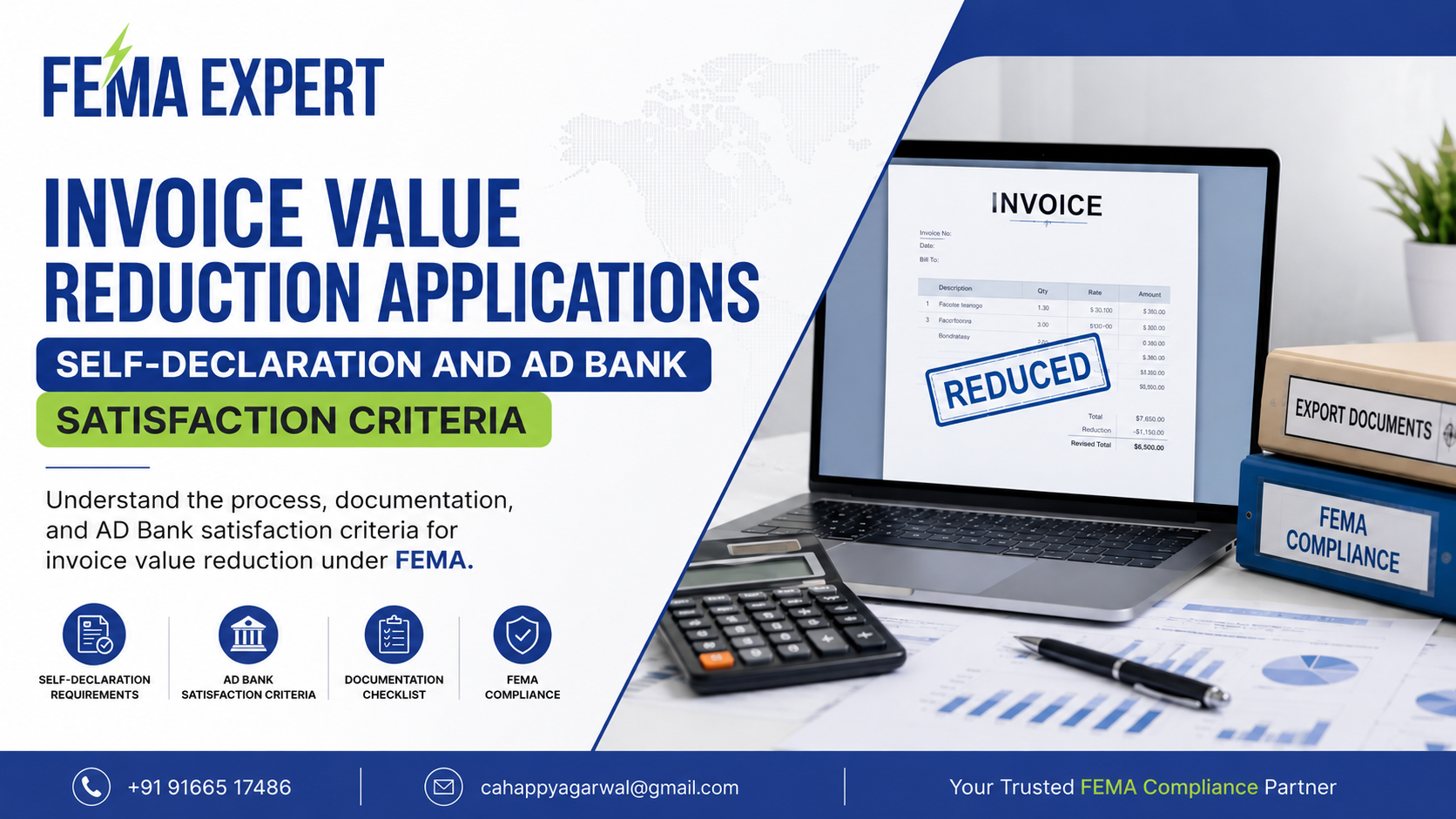
An invoice value reduction application is a formal request submitted to your Authorised Dealer (AD) bank asking them to accept a lower realization amount than the original export invoice value and to close the related export bill in the system accordingly.
Common situations where exporters file such Value Reduction Applications include: post-shipment quality disputes, commercial discounts agreed after shipment, partial non-acceptance of goods, renegotiation of contract terms, and service performance disputes where the buyer pays less than originally invoiced.
FEMA and RBI’s Master Directions on export of goods and services prescribe how and when export proceeds must be realized and repatriated, and under what conditions AD banks can permit deviations like delayed realization, write-off, or reduction in invoice value.
Exports are tracked through Export Declaration Forms (EDF) and EDPMS (Export Data Processing and Monitoring System), which record each shipping bill and its realization status; any under-realization, write-off, or reduction must be properly documented so that the export entry can be legally closed.
Because of this, any Tax Value Reduction Application or Cost Reduction Application linked to export invoices is not just an accounting adjustment – it has to be aligned with FEMA documentation and RBI guidelines.
RBI’s framework gives AD banks delegated powers to permit reduction in invoice value where the transaction is bona fide and supported by documentation. In many cases, reductions up to a certain percentage (often cited as up to 25% of invoice value) may be allowed if the exporter has a good track record and the case is genuine.
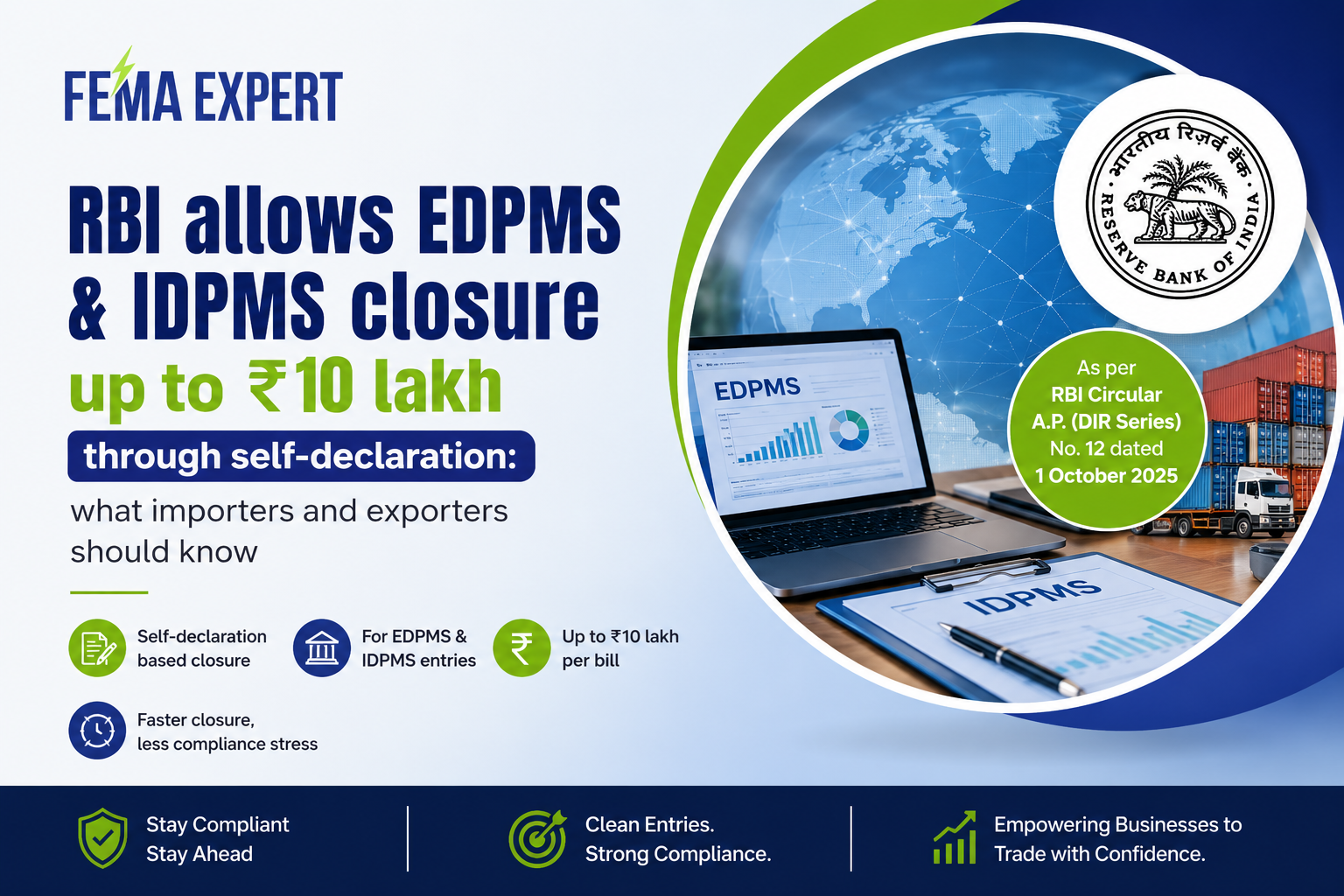
Recent regulatory relaxations and EXIM Guidelines allow AD banks to accept reduction in invoice value or close small entries on a declaration basis for invoices up to specified thresholds (for example, up to around INR 10 lakh or INR 1 million per invoice/shipping bill), reducing the need for detailed RBI approvals in routine cases.
Situations where prior RBI approval is generally not required include: genuine commercial disputes, quality or short-shipment issues not attributable to the exporter, and small-value entries that fit within the bank’s delegated powers and internal SOPs.
Self-declaration means the bank is willing to process the invoice value reduction or close the EDPMS entry based largely on the exporter’s signed declaration, instead of demanding exhaustive supporting documents, for small-value transactions.
Typically, your self-declaration and supporting pack for an invoice Value Reduction Application will cover:
A practical document checklist for such Asset Value Reduction Services around export invoices can include:
Your AD bank is the gatekeeper between your Business Value Reduction Solutions and FEMA/RBI compliance. Before accepting a lower realization or closing an EDPMS entry, the bank must check that the case fits within RBI directions and its own internal policy.
Banks review export bills, realization credits, correspondence with buyers, and your KYC profile, and then record the permitted reduction in their systems and EDPMS, so that the shipping bill is properly classified as “closed with short realization” or similar, rather than left open indefinitely.
When you submit an invoice value reduction application or a small Cost Reduction Application on self-declaration, AD banks typically look at a few key parameters:
If these conditions are met, AD banks are now explicitly empowered under updated EXIM Guidelines and related circulars to permit reduction in export invoice value and close the entry.
Even genuine Property Value Reduction Application or export reduction cases can be rejected if they are not presented properly. AD banks commonly decline requests when:
Imagine you raised an export invoice for USD 50,000 against a shipment of engineering goods. After shipment, the overseas buyer disputes performance and, after negotiations, agrees to settle at USD 42,000.
You receive USD 42,000 within the allowed realization period and then submit a self-declaration and supporting documents (invoice, shipping bill, buyer emails, settlement note) to your AD bank requesting that they accept the short realization and reduce the invoice value accordingly. The bank reviews the file, is satisfied that the case is bona fide and within its delegated powers, and records the reduction while closing the shipping bill as “realized – short” in EDPMS.
If you simply accept a lower payment and do not file a proper Value Reduction Application, the export entry continues to appear as partially unrealized or open in EDPMS. Over time, such outstanding entries can lead to caution listing or closer scrutiny from regulators.
This may trigger queries from the bank’s compliance team, delays in processing future remittances, and uncomfortable questions during FEMA or trade audits, especially where multiple under-realizations are not backed by documentation.
To keep your export Value Optimization Applications smooth and low-risk, consider these best practices:
Specialized FEMA advisors or export compliance consultants can:
For businesses that regularly use Asset Value Reduction Services, Business Value Reduction Solutions, or other Value Optimization Applications, having a FEMA expert on call can significantly reduce compliance friction and speed up AD bank approvals.
Not always. RBI has delegated substantial powers to AD banks to permit reduction in export invoice value where the case is bona fide and within prescribed percentage and value limits. Only when your case falls outside those limits, or is unusual or sensitive, is prior RBI approval typically required.
Yes. Reduction is often considered precisely because post-shipment realities change – quality issues, commercial discounts, or partial rejections are common triggers. The key is to support the reduction with documents and approach your AD bank within the realization timeline.
Most banks expect at least: export invoice, shipping bill/EDF or SOFTEX, buyer communication evidencing dispute or revised terms, and a debit/credit note or settlement agreement, plus your signed self-declaration. Some banks may ask for additional documents based on their internal SOP.
Self-declaration means the exporter certifies the facts of short realization and requests reduction, and the bank accepts this certification (often for invoices up to INR 10 lakh/1 million) without asking for exhaustive documentation. It is aimed at easing compliance for small-value export transactions.
Yes. FEMA’s export rules and EXIM Guidelines cover goods, services, and software, and AD banks can permit reduction in invoice value for all these categories, subject to bona fides and documentation. The underlying logic genuine under-realization of export value is the same.
If you don’t regularize the short realization through a formal Value Reduction Application, the EDPMS entry may remain open or show a shortfall, potentially leading to caution listing, bank queries, and difficulties in handling future trade transactions. Regularizing reductions is therefore essential to clean up your export data and stay FEMA-compliant.
If you frequently deal with short realizations, renegotiated contracts, or complex export structures, consider setting up a standard process – with expert support – for handling invoice value reduction applications so that your commercial flexibility never clashes with FEMA compliance.