

Expert review by CA Happy Agarwal
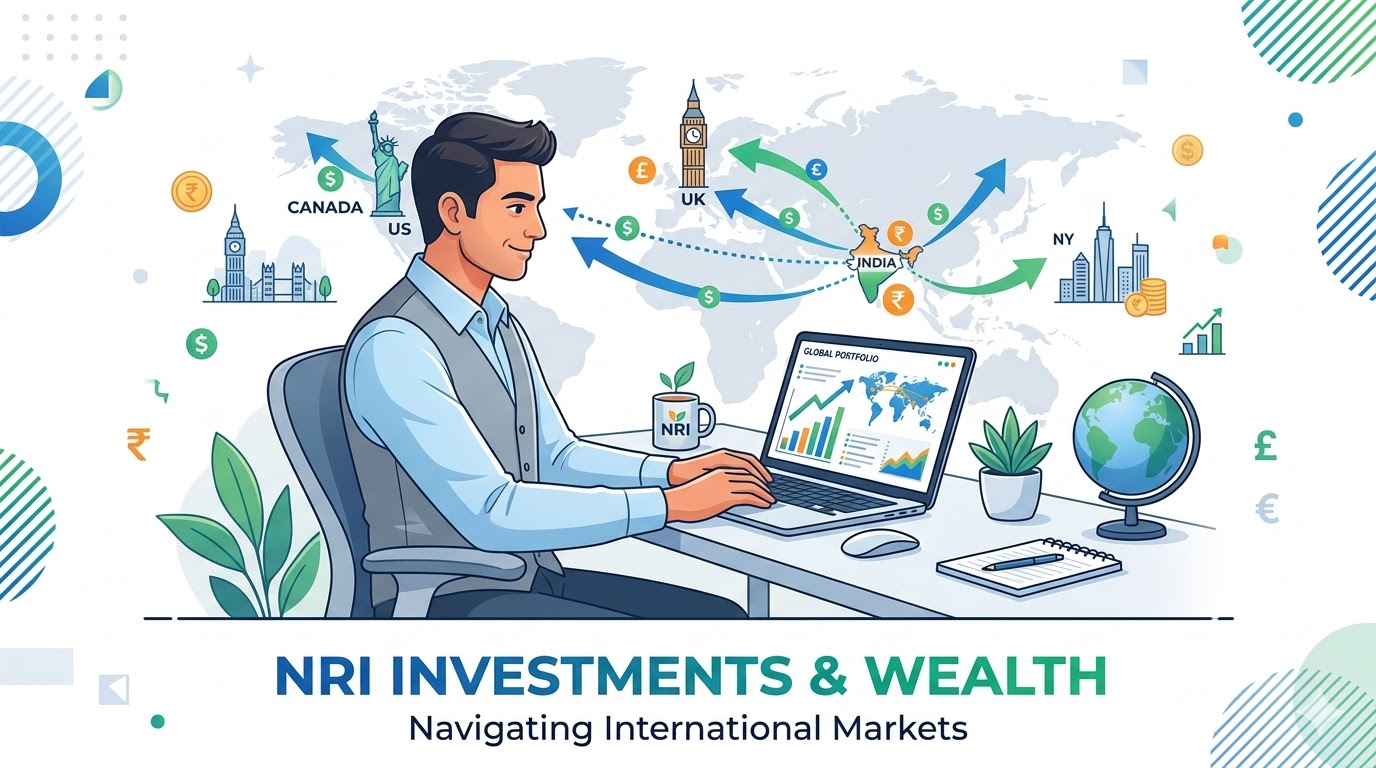
Let’s be honest sending money out of India used to feel like a hassle reserved for the super-rich. But times have changed. Today, you might be wiring money for your daughter’s tuition in Canada, booking a safari in Kenya, or finally buying those few shares of Tesla you have been eyeing.
However, before you hit that “transfer” button on your banking app, there is a rulebook you need to play by. It is called FEMA (the Foreign Exchange Management Act), and ignoring it can get your transaction blocked or land you in a compliance mess.
Don’t worry it is not as scary as it sounds. With insights from CA Happy Agarwal, we’re going to break down exactly how you can send money overseas without breaking any laws.
If there is one thing you absolutely must remember, it is the Liberalised Remittance Scheme (LRS) . Think of LRS as the RBI’s gift to Indian residents. Introduced to make life easier, it allows every resident individual to send up to a certain amount abroad per financial year without needing separate permission from the Reserve Bank.
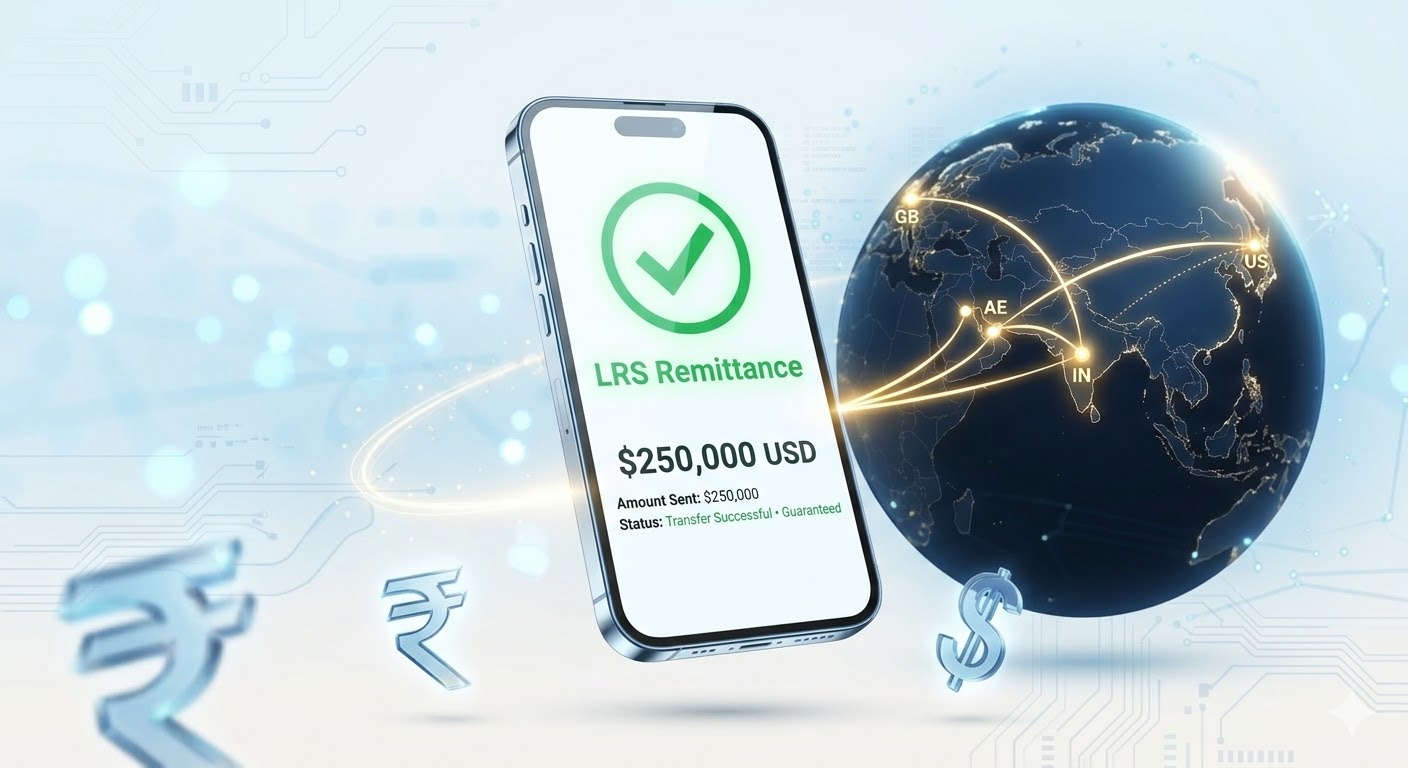
The magic number? Currently, the RBI LRS limit 250000 USD per financial year (approx. ₹2 crore, depending on the exchange rate). Yes, you read that right. As an individual, you can remit up to USD 2,50,000 every year.
Note: This applies to you as a resident individual. Companies, partnerships, and HUFs have different rules.
The RBI doesn’t just hand you a blank cheque; they want to know where the money is going. Luckily, the list of permitted uses is quite broad.
While the list of “dos” is long, the list of “don’ts” is strict. CA Happy Agarwal advises all his clients to remember this: Don’t test the RBI.
You cannot send money abroad for:
If you are sending money overseas from India, the process is smoother than you think, but you have to cross your T’s and dot your I’s.
1. Choose Your Channel: You can either go through your traditional bank (like SBI, HDFC, ICICI) or use specialized online remittance platforms (like Wise or BookMyForex) that often offer better rates.
2. The A2 Form (The Star of the Show): You will need to fill out Form A2. This is the standard application cum declaration for foreign currency remittance India. It’s a simple form where you state the purpose of the remittance and declare that you are within the LRS limit.
3. KYC is Mandatory: You cannot escape this. You will need your PAN Card and identity proof. The PAN is crucial because it helps the government track the tax on sending money abroad.
4. Provide Supporting Documents:
5. The Transfer: Once verified, the bank converts your INR to the foreign currency and wires it via SWIFT or other channels.
No one likes surprises from the Income Tax department. This is where Tax Collected at Source (TCS) comes in.
Under the latest RBI guidelines for sending money abroad, the bank will collect a tax from you at the time of remittance.
Good News: This TCS is not an extra cost. It gets added to your income tax liability. When you file your ITR (Income Tax Return), you can claim credit for this TCS, and you will either get a refund or pay the difference.
When I send money abroad, I always check the fine print. Banks often lure you with “zero commission” but hit you with a poor exchange rate.
Here is what you usually pay:
Pro Tip: Before you finalize, compare the exchange rate offered by your bank versus online fintech platforms. Sometimes, the difference can save you thousands on a large transfer.
CA Happy Agarwal notes that most of his clients get into trouble not because they are doing something illegal, but because they are being careless.
1. How much money can I send abroad from India?
You can send up to USD 2,50,000 per financial year under the Liberalised Remittance Scheme (LRS).
2. Is PAN mandatory for sending money abroad?
Absolutely. PAN is mandatory for any outward remittance India FEMA transaction. Without it, the bank cannot process the transfer.
3. Can I send money abroad without using LRS?
If you are a resident individual, LRS is the primary route for most personal remittances. However, certain specific business payments (like imports) are handled outside LRS under different foreign exchange regulations India.
4. How long does it take for the money to reach overseas?
Usually 2 to 5 working days. If you use SWIFT, it depends on the intermediary banks. Some fintech platforms are faster.
5. Is TCS refundable?
Yes. TCS is not an additional expense; it is just tax collected in advance. You can claim it back or adjust it when you file your Income Tax Return.
Sending money abroad doesn’t have to be a nightmare of paperwork. The RBI, through LRS, has made it incredibly convenient for Indians to participate in the global economy. Whether you are paying for a degree, buying a piece of New York real estate, or just going on a holiday, the rules are clear.
Just remember the golden triangle: Stay within the $2,50,000 limit, use the correct purpose code on Form A2, and keep your PAN handy. And if you are making a large investment or gift, a quick chat with an expert like Fema Expert CA Happy Agarwal can save you from future compliance headaches.
Ready to make your transfer? Compare your options today and ensure you get the best exchange rate