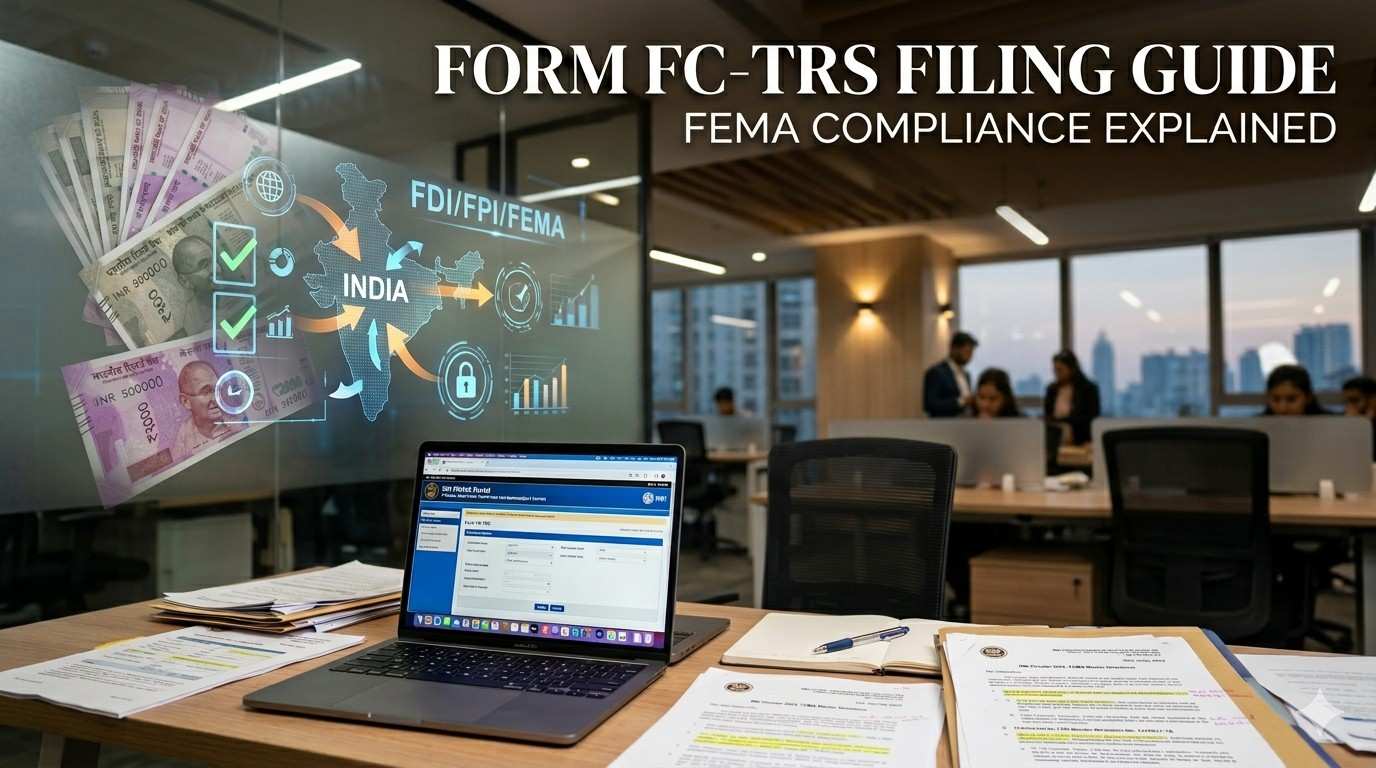



If your Indian company has received funds from a foreign investor, congratulations that’s a big milestone! But with foreign investment comes compliance responsibilities, especially under FEMA (Foreign Exchange Management Act). One of the key filings you’ll need to complete is Form FC-GPR, which must be submitted to the RBI through its FIRMS portal.
In simple terms, this filing tells the Reserve Bank of India (RBI) that your company has issued shares to a foreign investor and complies with India’s foreign investment regulations. It’s not just a formality delay or incorrect filing can lead to penalties. Let’s go step by step through the FCGPR process and understand how to handle it smoothly.
Form FC-GPR stands for Foreign Currency-Gross Provisional Return. It’s required when a company in India issues shares or convertible instruments to a foreign investor against inward remittance.
Here are a few key points to note:
In short, think of FC-GPR as a transparent record of your share allotment that keeps RBI updated on all foreign investments.
The RBI has made FEMA reporting easier through its FIRMS Portal (Foreign Investment Reporting and Management System). It offers two main modules:
So before you file FC-GPR, your company must be registered under Entity Master. After that, you can use the SMF section to file your form online.
Let’s break the process down:
Once submitted, the FC-GPR form goes to your Authorized Dealer (AD) Bank for verification.
After the bank’s review, it’s forwarded to the RBI for final approval. Once accepted, your compliance is complete!
RBI’s Master Directions are like the rulebook for foreign investments. Some key guidelines include:
If your company is going through a merger or acquisition, FEMA due diligence becomes critical. It ensures that all foreign investments and share transfers have been properly reported.
Common checks include:
Skipping due diligence can cause major compliance issues during audits or funding rounds.
ODI refers to Indian entities investing abroad in subsidiaries or joint ventures. Companies can invest under the Automatic Route if conditions are met.
Key ODI regulations include:
When shares are transferred between residents and non-residents, Form FC-TRS must be filed.
To get more information you can read complete article on Reporting Share Transfers Under FEMA and understand everything in just 3 minutes reading.
Many companies make these avoidable mistakes:
Being proactive and setting compliance reminders can save your company from FEMA penalties.
FEMA regulations are complex, and non-compliance can cost you both time and money. A FEMA expert or consultant can help with:
When in doubt, always seek professional advice to ensure smooth compliance.
Filing Form FC-GPR through RBI’s FIRMS Portal is a crucial step after receiving foreign investment. It keeps your company compliant under FEMA and prevents future penalties. By maintaining proper records, following timelines, and consulting a FEMA professional, you can turn a complex task into a quick routine.
Foreign investment is an exciting growth opportunity just make sure your compliance journey is equally strong!
Q1. Who needs to file Form FC-GPR?
Any Indian company that has received foreign investment and allotted shares to a foreign investor must file FC-GPR through the RBI FIRMS portal.
Q2. What is the time limit for FC-GPR filing?
It must be filed within 30 days from the date of share allotment.
Q3. What happens if I miss the deadline?
Late filing may attract penalties or require a compounding application to the RBI.
Q4. Can a startup file FC-GPR online?
Yes, the FIRMS portal allows both startups and established companies to file FC-GPR online.
Q5. Is professional certification mandatory?
Yes, the filing must include a CS certificate confirming compliance with FEMA and Companies Act.